Showing posts with label art. Show all posts

Monday, December 5, 2011

Stuckism vs. Suckism: What Is Modern Art?


I'd like to talk about boring modern art. We're all familiar with the type; huge, lofty, and hopelessly abstract monuments of intellectualism which fall flat on most folks. The type that earns it that special "modern art" stigma.

Why is art today this way?

Mark Di Suervo "Are Years What?" 1967. Washington, DC ● Di Suervo's piece conjures a derelict iron building.
The answer begins in the late 1800's with the startling transition the human condition underwent going from a non-industrial society to the modern world. The replacement of workers with machinery, as well as the crushing anonymity of the modern city generated an enormous amount of existential stress for the common man. Originality became a coveted rarity. Simplicity became a nostalgic desire. Within this climate artists like Gauguin, Picasso, Jean Arp, and Mondrian were sensationalized due to their uniquely reduced styles.

Mid-20th century witnessed a shift away from the rich expressiveness of early Modern painters towards a new form of self-reflexive conceptual art. This shift is essentially the transition into post-modernism, as it has become generally associated with conceptual art. Duchamp's "Fountain" of 1917 was the debut of this type of meta-art which caused an entire reevaluation of the fundamental roles of artistic process and authorship. Suddenly, the finished artwork became secondary to the original idea or concept.


Joseph Kosuth "One and Three Chairs" 1965. London. ● Sit & Think on this one for a while.

Above, Joseph Kosuth critiques this phenomenon by focusing his concept on the actual representation of the idea. Here the viewer ponders the importance of each of Kosuth's four iterations of the chair; the actual idea of the chair set on par with the visual representations instead of over them.

These types of short quips corresponded with the development of Minimalism, the movement responsible for eradicating any necessity of thoughtful aesthetic composition in art. Artists such as Donald Judd and Robert Morris found success with works which were nothing more than a metal box, or plate, in space. Though much can be (and has been) said about the interesting play on space and specified objects in the works of minimalists artists, the movement caused a trend of art so stripped-down that it was generally uninteresting to folks. John Baldessari's work "I Will Not Make Any More Boring Art" references this.

John Baldessari "I Will Not Make Any More Boring Art" 1971. New York, NY ● Cute.

The future of art..
Taking after the likes of Francis Bacon and Lucien Freud, the Stuckists (est. 1999), a well-organized group formally responding to conceptual art, push for a return to figurative painting as a mode for representing modern ideas. Their manifesto Remodernism outlines the foremost failures of current works (loftiness, sarcasm), and make a call for a new spirituality and return to beauty & authenticity in art. Stuckists are known for dressing in clown suits and protesting the Turner Prize, a large cash sum usually given to the driest conceptual artists.

Although conceptual art is still the dominant school of thought today its nature and media are changing. It was traditionally a multimedia movement; found objects, text pieces, performance, etc, but today media such as video games, Real-Time 3D Multi-User Virtual Environment (
RT3D MUVE) and especially the internet have emerged to the forefront and we find ourselves undergoing another drastic transition of social structures (a Digital Revolution).

Like newspaper or television before them, these media have a way of incorporating other forms of media as content, such as photos, illustration, text, and eventually video, sound & interactivity. This McLuhan inspired idea is known as Post-convergence, and gives us a glimpse into the future of how art might look. The Cremaster Cycle (1994-2002) by Matthew Barney, which includes five feature-length films as well as sculptures, drawings, photographs, and artists books, exemplifies post-convergent tendencies in artmaking.

We may expect future artwork to remain entrenched in much of postmodernism's looks and feels, as 60's style Conceptualism (with its various intersections with Pop and Abstract Expressionism) continues to define the global trajectory of Western art, though as new technologies become available contemporary artwork begins to reflect the capabilities of new media. Conventional examples such as the CGI in Avatar or Transformers, and the sound engineering of Skrillex demonstrate the way that digital technologies become integral to the artwork and has a tendency to rely upon effects that are shinier and in higher definition than anything in reality. This relates to the notion of hypermodernism, or a deepening or intensification of modernity as information and media infinitely converge, and as science and technology push our species towards singularity.

Of course we are left only to speculate on how art will look in the future until these next few decades have passed. However I'm sure there will be plenty of robots.


EDIT: If you're interested in reading more, here is the article I would have written if I were a tenured professor.

Monday, November 21, 2011

Team Gallery!

Is Conceptualism back in vogue? Last April I looked at the works of Stefan Bruggemann and how his text-based art works upset many pretenses of what art ought to mean, first in that it is a meaningful work of art itself. Revisiting him in a Google search, I stumbled across this pretty stunning collaboration he did with Pierre Bismuth:


Here Bismuth's spray painted comment in a way completes Bruggemann's work, responding in the only way one can to such a straightforward statement, with another extremely cut-and-dry statement. But besides being a nihilistic art party, this work is like an old Donald Judd that offers no explanation other than its existence in [gallery] space, but with a fresh self-consciousness, more sincere than sarcastic.

Mr. Bismuth enjoys collaborations. His association with other artists of the Team Gallery, such as Ryan McGinley and David Ratcliff creates a thread whose common characteristic is conceptual art. Go to teamgal.com to check out these up-and-coming type artists.

Tuesday, October 25, 2011

Fresh Art: Allison Shulnik, anonymous

Allison Shulnik


Her works are of a clear aether, newly synthesized and bright-- but recall a mystery and deviance present in the art of Dubuffet. The effect: interplays of primal vitality and crumbling ephemerality of the body and mind.


Anonymous [Ego Leonard?]

Some jokester leaves an 8 foot tall lego man on the beach. Is this mixture of PR stunt, performance, and public installation a legitimate form of art? I honestly don't know you all must tell me


Monday, October 10, 2011

Pablo Picasso, meet Kenojuak Ashevak


Kenojuak Ashevak is an Inuit artist who produces prints with all the ethereal beauty of the Baffin Island landscape she grew up on. Her artwork are studies in the transformation of simple forms into traditional iconography. The spirit forms of various creatures are depicted in an elegant centralized composition, suggesting autonomy as well as the links to their mythological significance.


Ravens Entwined, lithograph


Birds from the Sea, stencil, 1960


and my personal favorite; Arrival of the Sun, stonecut, 1962

Inuit and Native American art in general has not traditionally been considered important to the Western World's conception of what art ought to look like, but as the world becomes increasingly globalized, we begin to look back to time-tested cultures for more natural solutions to the problems of representation and of life. Kenojuak's prints are successful at expressing that which is most urgent and primitive. They strive for order and meaning, without complication, as we do in life as well as image-making. See more of her work here.

Friday, June 3, 2011

Food for Thought


Combining text and image has always been a welcomed challenge for me. This formula came to me in a half-asleep revelation after witnessing youth culture in a pure form. "Kids these days." We must be frank with them, they're tired of old sarcasm. Though they do not like to be indoctrinated, my message is urgent. The planet hasn't time for another generation of Western egocentricism.


Short phrases provide meaning on the surface, the inset images juxtaposed with one another, as well as with the words they apply to, help further the meaning and add a little ambiguity.

The photos are originals, from Flickr Creative Commons, Wikipedia public domain & freedigitalphotos.net. I liked the humanity of the selection on Creative Commons.


The photo credits are a copyright compliance and a reference the post-structuralist art-making conventions that have been gaining speed in music (in the form of sample-based hip-hop & electronica) and visual art (in the form of collage and montage) since the late 20th century. The room for originality nowadays is more in the basic concept and less in the representational style.


Is it significant that I build these just as I would ads for the newspaper? What do you think?


Thursday, March 10, 2011

Bang!

Bang! is the reincarnation of the Dropout, an alternative biweekly that used to be found all over the streets of Eugene. With their reinvention, they downsized from the full tabloid to a letter sized paper, and adopted a bold and clean new style. The layout of Bang! and the design work of Steven Weeks is at the same time an exhuberant digimodern avant-garde as well as calculated in its approach to historical publication design.


See issue 9 and explore the website here: http://bangpaper.com/?page_id=133

Thursday, February 3, 2011

Study of Propaganda

Propaganda images & links:


Green Patriot posters is a huge collection of User-submitted environmental awareness posters. Full of very clean and concise contemporary graphic design: http://www.greenpatriotposters.org/posters/index.php?p=425&sort=tr

---


This photo is not a propaganda image itself, but it relates to the current political attitude. Why take your eyes off the screen when you got one in your pocket? The US government and media work together to foster an atmosphere full of intellectual diversions and dead-ends.

---

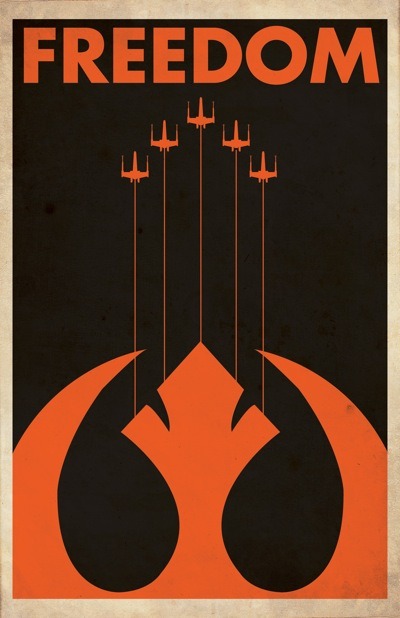
Simply googling "Star Wars propaganda posters" reveals a trove of funny, novel, and vaguely political propaganda posters.


They aesthetics range from minimalists and beautiful to tacky and cartoon-like.


What's interesting to me is the rich political iconography that George Lucas has included in his films. Seeing the trilogy as a young boy, I didn't understand the full significance of Luke & "The Rebel Alliance"s struggle against "The Empire." Its likely Lucas used intentionally ambiguous titles such as these, and he even provided symbols to represent each side of this battle.

Rebel Alliance:


Imperial:


I have also uploaded a powerpoint of Russian and other propaganda images which you may find here (for now): http://www.mediafire.com/?z2xlroiege4o3lx

Wednesday, February 2, 2011

William Blake, Mark Titchner, Stefan Bruggemann

Text & Image Artists

William Blake was a Romantic G:


http://www.dailyartfixx.com/wp-content/uploads/2009/11/blake_william_nebuchadnezzar.jpg


http://www.arthistoryarchive.com/arthistory/romanticism/images/WilliamBlake-Jerusalem-Plate-33-1820.jpg


http://nickbaines.files.wordpress.com/2009/07/jerusalem-william-blake.jpg

Mark Tichner is a Photoshop G:


Most of his work features these short motivational speeches, with a very angular, blocky type. What's interesting is the way he photoshops the images past the point of absurdity. The average viewer, who is accustomed to varying amounts of photoshoppy effects applied to nearly everything in our visual culture, is overwhelmed with the plethora of intersecting and disappearing lines and colors but is obligated to look at the same time. The exact sort of sublimity and energy that advertisers hope to achieve with photoshop is what Titchner harnesses to send progressive and semi-critical messages. This puts him in the same general movement of Banksy and Shepard Fairey; that is, the artists devoted towards the battle against the massive media takeover of American culture and proliferation of advertising therein.

Stefan Bruggemann is the Gangsta of satire:


I interpret this second example to be poking fun at the simple aesthetics of the conceptualism in the 60's. But 50 years later, we're still just as lost as a young Donald Judd in the matrix of post-modernism.


Neon is a popular way to make text and specific letterforms look way cool.


Monday, January 17, 2011

Contemporary Subculture of Dogmatic Consumerism and Apolitical Milieus

Originally I had planned to contextualize this conversation through my (albeit limited) understanding of the Zeitgeist. A current professor of Art History of mine warned the class to be wary of people who use the term "post-" to describe a movement of any sort, since that usually means they don't know what they're talking about-- yet. But the high Post-Modern era has come and is beginning to be replaced by a new generation of technologies, social conventions, political issues, and power structures.

If the previous era was marked by Warhol, Jeff Koons' vacuum cleaners and Reaganomics; the glory & glamor of being on the handle-end-of-the-stick, then this one is marked by Banksy and Fairey's Andre the Giant, and the reality of sending critical messages through the capitalist infrastructure itself.

The author of Unmarketable: Brandalism, Copyfighting, Mocketing, & the Erosion of Integrity Anne Elizabeth Moore refers to it as "manic, late-stage capitalism," as she details in her book the various ways in which advertising organizations have infiltrated not only alternative media, but
the alternative ethos itself.


Advertisers target an alternative audience by becoming them. The Diesel Jeans ad emotes political passion, depicting protesters in the act of standing up for their message. Their signs say "Kiss your Neighbor" but their message is simply "Buy Diesel Jeans."


This approach of marketing fashion through a direct association with protesting is all the rage. This image appeared on Vice magazine's website shortly after the recent student protests in Britian, right above a sub text listing the brands of the clothes the model is wearing, and right to the left of an American Apparel ad.


Directly above are the clever Sony PSP GraffADis which appeared on the walls of major cities overnight. The international street artist community was outraged by the seamless transition of public spaces from canvas to billboard. They argued that the average passerby would not be able to differentiate an ad from an artistic expression when it presents itself in a medium which, up until this point, belonged expressly to the latter.


The tactics of energy drink producers such as Red Bull are a common and visible example of the veracity of advertisers in their attempts to reach not just young people, but cool young people. Whether on foot or in a weird chop-top mini cooper, hip looking associates hit skate parks, coffee shops, local hangouts, college campuses, trendy neighborhoods, social events, music festivals, etc. in order to get their brand recognized. I've even seen the Red Bull car handing out drinks to whitewater rafters at a boat launch on the Colorado river.

Word of mouth messages weren't always diluted with consumerism. Two decades ago, in our very own rainy backyard, punk and feminism has fused to form the Riot Grrrl movement. Anything but capitalist; people like Alison Wolfe, Kathleen Hanna, Molly Neuman, and Tobi Vail and the zine they produced were dedicated to promoting egalitarian ideas, or more adamantly, criticizing oppressive practices.


The movement gained much of its momentum from the healthy punk and alt scene of the early 90's. Token Riot Grrrl bands Bratmobile and Bikini Kill often played with (and even dated members of) Nirvana. It was a pure, rebellious message, but it was obscured by the mainstream media when "girl-power" was used simultaneously to describe No-Doubt and the Spice Girls.


Nowadays Bonnie Burton, zinester & underground media person, uses the -grrl suffix to promote Star Wars: The Clone Wars drawing books on her "indie" blog Grrl.com.


By playing off of popular Minor Threat album art, Nike SB was able to commandeer the attention of punks on the East Coast. Most of them were livid, but the nationwide backlash only led to more brand recognition for Nike within the punk community. Dischord Records never filed a lawsuit, since doing so would send the message that it really is all about the money.


Just last year there was an uproar when an AT&T commercial showed national monuments and buildings being wrapped in orange fabric. Anyone who is familiar with the work of Cristo and Jeanne-Claude immediately recognizes the association, and if there was any doubt, the disclaimer on the bottom the the last frame confirms that indeed the commercial has (no) association with artists Cristo and Jeanne-Claude. Whether or not AT&T was marketing specifically towards those with a background in contemporary art history, is unclear. Judging by the comments on Youtube & the Huffington Post, the commercial reached a very general audience and then gained popularity through word of mouth controversies, just as in the example above.

What does it mean to live in a world where urban and indie images and media are regularly hijacked for advertisement? Well, for one, more kids are seeing corporate logos. Many of them in media where art or egalitarianism used to (or should still) be. I argue that this infiltration, this invasion, has had devastating effects upon the contemporary subculture and its political identity.

II.

Dating back to the 1920's and perhaps earlier, the US has traditionally seen a relatively consistent progression of subcultures throughout the decades. Jazz, Beat, Mod-Rocker, Hippie, Alt-Punk, Indie-Emo, and now, the Hipster. But whereas hippie subculture arose out of a discontentment with modern conventions and the Vietnam War, and punk was borne from sheer rebelliousness and anarchism, the new subculture seems to have risen up without any corresponding political ideals.

Traditionally western subcultures have always had a large constituency of white middle-class college students and other young intellectuals, and this one is no different. These college students have time, money, and intellect to devote towards progressive, artistic, and inventive expression, and are typically the conduit through which radical ideas travel. The only difference is that where earlier subcultures were organizing demonstrations and screaming anti-capitalist criticism from a microphone, the current, is not.


Postmodernism witnessed a shift towards recycling and re-contextualizing existing material as a means of production, as opposed to a more traditional approach which relies upon originality. Hipster as a late-postmodern (or early post-postmodern) subculture, looks towards all earlier styles and cultural phenomena to re-adapt and re-combine to call their own; the granola aesthetics of the hippies, the day-glo colors of 1980's hip-hop, and the tight pants of the punks and emos. The hipster does what any person does, socialize him/herself according to the closest recent historical matches, but since the hipster does not match perfectly any historical movement, he or she does what any postmodern person does, and re-adapts past elements to form his or her "own" style. Within the culture is a fundamental fear of conformity, which is caused by the multitude of individuals involved in this far reaching pastiche of modern style. There is even air of disillusionment and disgust, since even the simplest things such as flannel shirts have been "stolen," appropriated, made hip. And of course, once it's hip-- it's no longer cool.

Assuming the close association of any social movement with its respective musical movement, this contemporary subculture appears relatively healthy. Despite the massive fragmentation of today's indie music into niches (among them doom gaze, chillwave, dub-step, sludge metal, trip-hop and other forms of new electronica), there are robust indie scenes in many major US cities. Perhaps it's this very dichotomy between generic indie & highly-specific niche music, or perhaps it's because they haven't figured out how to dance to it yet, but the term "indie" has been somehow replaced by "hipster" to describe the culture of up-and-coming bands. Without a wider recognition of the concept indie or independent culture, hipsters are less likely to identify with not only indie shows and bands, but books, films, games, news outlets & other publications, shops, and services. Despite being recognized for the most elementary acts of being independent (riding and building bicycles, eating local & organic food), the term "hipster" is still widely preferred. Wikipedia even defines hipsters as "urban middle class adults and older teenagers with interests in non-mainstream fashion and culture, particularly indie rock, independent film, and magazines such as Vice and Clash, and websites like Pitchfork Media." It is unclear whether or not the appropriation of the term "hipster" itself is a conspiracy to sideline indie culture and open up a new markets for flannel shirts, but one things for certain; the nomenclature of the current subculture is confused.

In a time where photos and blog posts are picked up and left behind like a million intersecting bread crumb trails, advertisers are just as likely to lay a trail as they are to follow one. Douglass Haddow argues in the Adbuster Magazine article “Hipster: The Dead End of Western Civilization” that being born under the microscope of the ad industry has caused the counterculture to meld, despite itself, with the mainstream. He also suggests that “hipsterdom” and its ongoing identity crisis help create an environment of constant consumption; as the old band or trend becomes popularized, the hipster must find the new one...

 Never before has a society witnessed such a massive manipulation of the concept of cool. The mainstream media and our education system also shape the contemporary subculture, though, and in the age of smartphones and Texas standards, advertorials and infotainment, the young person is not afforded much help in developing a critical viewpoint of the society around them. A politically charged counterculture is important for any society, as an outstanding example of opposition to the status quo, but more importantly as a framework for young people to express their ideas and learn about the world. Without one, the threat of an entirely homogenous youth culture unthinkingly subservient to the whims of mainstream society is quite real and already underway. Though it is unlikely a massive DIY movement will come to replace hipsters in the next few years, an inevitable paradigm shift is on the distant horizon. Whether or not the future will usher in a new generation of critical and politically active youngsters will largely be up to us.